
Blog 2: How Gamification Works in the K–6 Classroom
Motivation. Engagement. Inclusivity. Can game mechanics enhance them all?

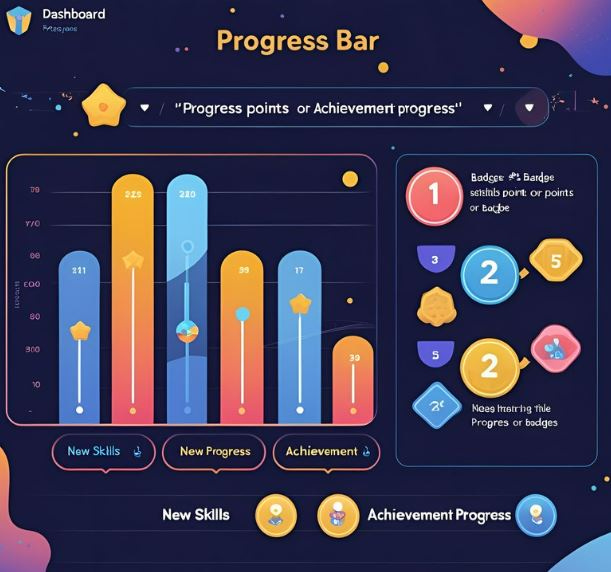
Gamification enhances learning in K–6 classrooms by integrating game-based elements that align with how young children process, engage with, and retain information. These elements—such as point systems, badges, progress bars, levels, and feedback loops—are not only motivational tools but also support cognitive development by breaking down learning into achievable goals and rewarding sustained effort (Deterding et al., 2011).
For primary students, motivation is often tied to clarity, structure, and a sense of perceived autonomy. Su and Cheng (2015) found that upper primary students demonstrated improved academic outcomes and motivation when learning was embedded within a mobile gamification system. Their engagement increased as they received immediate feedback, tracked progress visually, and worked toward levelled learning goals—an approach that resonates developmentally with children’s preference for routine, mastery, and recognition.
Gamified systems also tap into what Vygotsky termed the Zone of Proximal Development (ZPD) (Vygotsky, 1978). Tools such as Prodigy or Classcraft use adaptive algorithms or teacher-set progression that can scaffold learning just beyond the child’s current ability, promoting confidence and challenge simultaneously. These platforms also include analytics dashboards that track student progress, allowing teachers to identify learning gaps, adjust instruction, and intervene promptly based on real-time performance data. This is especially helpful for diverse learning profiles, including students with autism, ADHD, or processing challenges, who may require predictable routines and multimodal feedback (Hussein et al., 2023).
In a practical sense, gamification is highly flexible. A teacher might use a platform like Kahoot! to review content interactively or build a classroom-wide quest system where students earn XP (experience points) for collaboration, effort, or creativity. These approaches foster not only academic achievement but also social-emotional learning—promoting persistence, teamwork, and intrinsic reward systems (Aguilar et al., 2013).
Gamification is most effective when it avoids overemphasis on extrinsic reward. Deci, Koestner, and Ryan (2001) caution that over-rewarding can reduce internal motivation, especially if learners come to rely on tokens or praise instead of task satisfaction. As such, educational gamification should emphasise mastery, curiosity, and student choice.
The literature also reminds us that accessibility must be part of gamification planning. De Sousa Borges et al. (2014) noted that young learners with limited digital literacy or access to technology may be left behind if systems are overly complex or visually overwhelming. Age-appropriate design and equity of access are non-negotiable for inclusive implementation and will be explored in forthcoming blogs.
Importantly, gamification is not a one-size-fits-all solution, but when designed around developmental theory, scaffolded goals, and student needs, it can transform how students learn and how teachers deliver curriculum. The next post will examine which learners benefit most—and which may be unintentionally excluded—based on demographic, cognitive, and social factors.
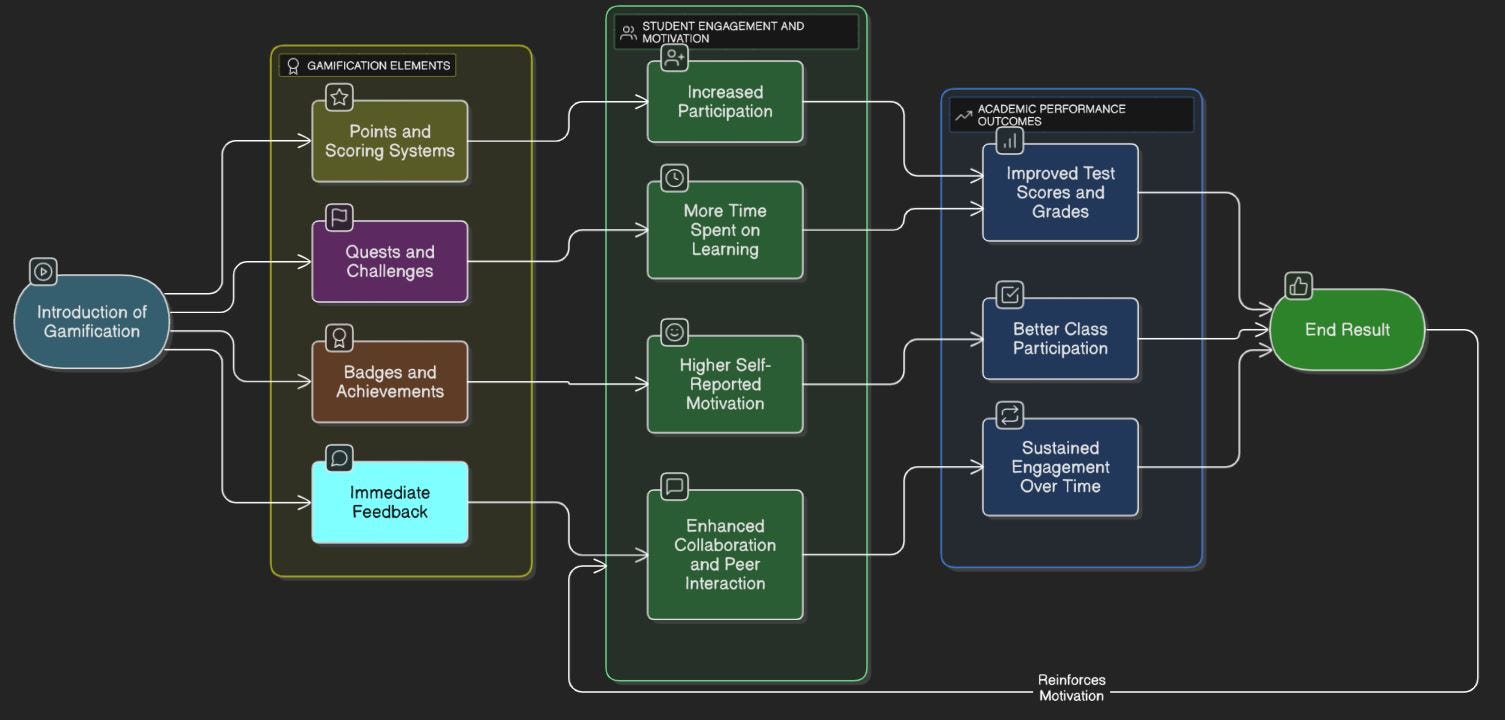
Image created by the Author using DiagramGPT, 2025.
References
Aguilar, S. J., Holman, C. D., & Fishman, B. J. (2013). Game-inspired tool support for learner engagement in authentic practices. Games, Learning, and Society Conference.
Deci, E. L., Koestner, R., & Ryan, R. M. (2001). Extrinsic rewards and intrinsic motivation in education: Reconsidered once again. Review of Educational Research, 71(1), 1–27. https://doi.org/10.3102/00346543071001001
De Sousa Borges, S., Durelli, V. H. S., Reis, H. M., & Isotani, S. (2014). A systematic mapping on gamification applied to education. In Proceedings of the 29th Annual ACM Symposium on Applied Computing (pp. 216–222). https://doi.org/10.1145/2554850.2554956
Deterding, S., Dixon, D., Khaled, R., & Nacke, L. (2011). From game design elements to gamefulness: Defining “gamification”. In Proceedings of the 15th International Academic MindTrek Conference (pp. 9–15). https://doi.org/10.1145/2181037.2181040
Hussein, E. T., Kan’an, A., Rasheed, A., Alrashed, Y., Jdaitawi, M., Abas, A., … & Abdelmoneim, M. (2023). Exploring the impact of gamification on skill development in special education: a systematic review. Contemporary Educational Technology, 15(3), ep443. https://doi.org/10.30935/cedtech/13335
Su, C. H., & Cheng, C. H. (2015). A mobile gamification learning system for improving the learning motivation and achievements. Computers & Education, 88, 258–273. https://doi.org/10.1016/j.compedu.2015.05.005
Vygotsky, L. S. (1978). Mind in society: The development of higher psychological processes. Harvard University Press.